
Scheduling Last Mile Delivery: How to Avoid Failed Deliveries
If you’ve heard of the last mile problem, you know getting products to your customers can be the toughest part of the delivery. However, we here at USA Last Mile Logistics understand strategy is the solution to solving that problem—and it starts with a harmonized schedule between you, your driver, and your customer.
Key Takeaways
- Failed deliveries happen when customers input the wrong address or drivers encounter restricted neighborhoods—and the cost to redeliver can pile up for shippers.
- One failed delivery can lead to lost customers and spending additional funds to reship your goods.
- Scheduling last mile delivery for efficiency and carrier and customer satisfaction starts with knowing your shipping forecast, streamlining your production scheduling, and securing warehousing and transportation.
Looking to make the final mile an easy journey? You’re in the right place. Schedule your next last mile transport with us and speak with our expert freight consultants today.
What Counts as a Failed Delivery?
Failed deliveries are when the customer doesn’t receive their ordered goods. They can happen for a number of reasons, but we’ve listed the top three below.
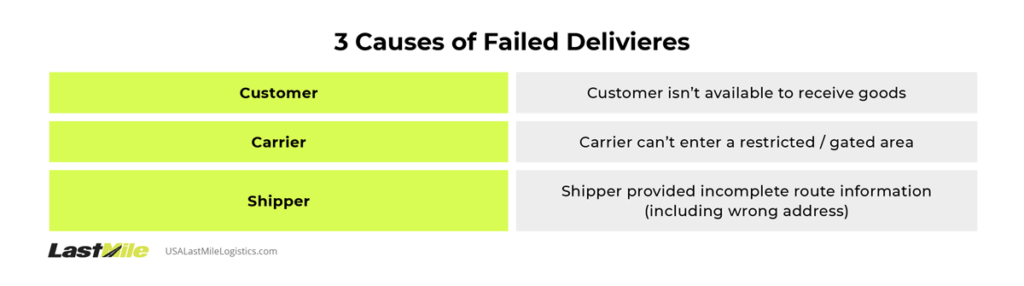
Sometimes customers may input an incorrect or incomplete address. Common mistakes include using inaccurate abbreviations for “avenue” or “boulevard” or not using the ZIP+4 code format.
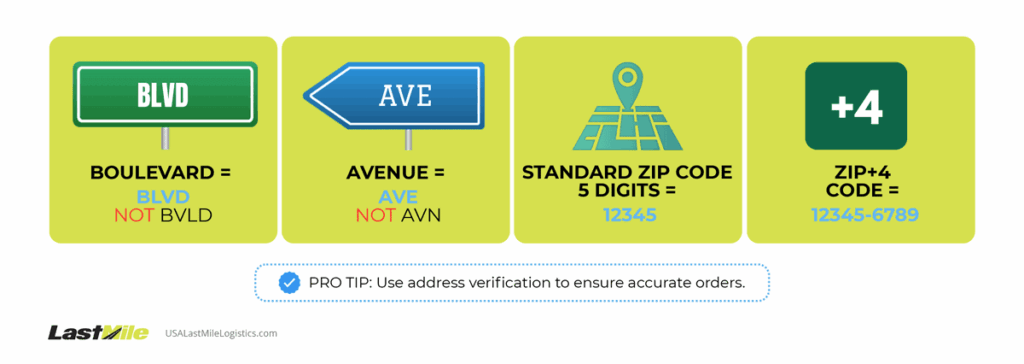
However, shippers can help avoid this by including an address verification step before the customer completes their order to ensure the correct address is on file.
Unfortunately, 41% of customers place the blame for failed deliveries on the business shipping their goods. This means shippers need a safeguard from packages not reaching their final destinations to maintain customer satisfaction. Failed deliveries can put strain on all parties involved, especially the shipper.
The effects it can have on your business include:
- Lost Customers: Customers usually don’t return to businesses that lost their packages or made them pay for redelivery.
- Lost Profit: Shippers have to cover the costs of fulfilling another order or provide a refund to the customer.
- Rehiring Carriers: Shippers have to pay drivers for a second delivery, if the driver has the capacity, including fuel, vehicle, and potential liftgate expenses.
Failed deliveries are a part of the last mile problem, but the good news is we know how to navigate rocky roads for on-time deliveries.
Let’s take a look at how to optimize scheduling last mile deliveries.
Related: Last Mile Delivery Problems: Keeping Your Packages Flowing
Strategies for Scheduling Last Mile Delivery
The first step in scheduling your final deliveries isn’t just coordinating with your carrier—it’s organizing your supply chain before you move your product.
Use our supply chain management strategy below to schedule your final mile shipments without a hitch.
Know Your Shipping Forecast
If you are an established shipper, you’re familiar with your customer habits, like how frequently they order, which products, and how much of that product they need.
Use this information to determine your shipping forecast to:
- Understand customer demand
- Improve inventory management to avoid stockouts or overstock
- Increase warehousing and shipping production
When you know what you move and in what capacity, you’re able to save space and money in warehousing, hire the right sized trucks for delivery, and create a schedule that gets packages to customers on time each time.
If you are a new shipper and don’t have customer history data to pull from just yet, review your target market’s customer habits to learn what’s in demand and which delivery method is preferred (like same-day deliveries) to plan ahead of time and build an optimal delivery system.
Streamline Production Scheduling
Once you know your shipping forecast, refine your inventory production schedule to efficiently move goods in and out of your warehouse.
Production scheduling is organizing your supply chain’s work flow to source materials and build finished goods to ship.
If you don’t import raw materials to create goods but, instead, purchase ready-to-ship merchandise, you’ll still need a steady production schedule to send products on the road for the final mile.
When you consider your shipping forecast and customer base, your production schedule could benefit from partnering with multiple warehouses near your customers for easier and quicker deliveries.
Secure 3PL Warehousing and Transportation
Sometimes one warehouse doesn’t cut it. If you have nationwide demand, the last mile of delivery could stretch into days or weeks of customers waiting for their deliveries.
To avoid lengthy shipments and failed deliveries, work with a third-party logistics (3PL) warehouse to store your goods in the areas you service most.
You can also reduce transportation costs by switching from using your own vehicles and fuel to working with local carriers who know the area and can deliver freight swiftly and safely.
Related: Last Mile Delivery Optimization: From Hub to Home Fast
Simplify the Final Mile with USA Last Mile Logistics
When you need reliable shipping, USA Last Mile Logistics is on your side. Our failsafe strategy for final mile transportation guarantees 99.5% on-time deliveries.
Call us at (866)-569-1445 to schedule your next delivery or click here to contact our freight specialists with your questions.